

Friday, September 5, 2025
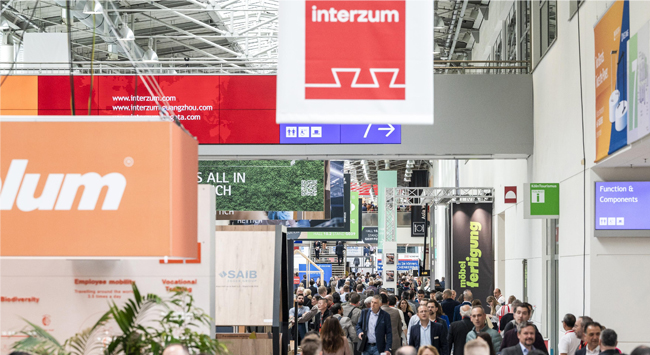
The global woodworking and furniture industries are at a pivotal moment, navigating a landscape defined by both unprecedented innovation and urgent environmental concerns. This dynamic was on full display at the 2025 edition of interzum, the world’s leading trade fair for furniture production and interior design, which concluded with a powerful message for the future. The event, held in Cologne, Germany, reaffirmed its status as a critical nexus for the sector, drawing nearly 60,000 trade visitors from 148 countries.
Against a backdrop of global resource challenges and growing consumer demand for sustainable products, the fair’s central theme, “Rethinking Resources: Circular and Bio-based Solutions,” resonated deeply with attendees and exhibitors alike. Over 1,600 international exhibitors, spanning the three key segments of “Function & Components,” “Materials & Nature,” and “Textile & Machinery,” showcased a wealth of innovations that demonstrated a collective commitment to building a more resource-efficient future.
The sheer scale and global reach of interzum underscored its unique position as a must-attend event. It’s not just a showcase for new product launches and world premieres; it’s a vital platform for cross-sector collaboration and knowledge exchange. High-quality visitor groups, including key decision-makers from the manufacturing industry, architects, designers, contract furnishers, and product developers, flocked to the halls of Koelnmesse to forge new partnerships and gain critical insights into the trends shaping tomorrow’s living spaces.
Experts and industry leaders at the event were in broad agreement: a fundamental shift toward sustainable processes is no longer optional but a necessity. The risk of resource shortages, coupled with increasing environmental regulations like the EU Regulation against Deforestation, is driving an urgent need for the accelerated development of recyclable and circular products. interzum 2025 highlighted how companies are rising to this challenge, with a palpable spirit of innovation and a clear will for sustainable transformation.
Throughout the exhibition halls, sustainability was the dominant theme. Products on display went far beyond simple eco-friendly claims, showcasing tangible advancements in the circular economy model. This included everything from foams made from recycled waste and innovative methods for recovering fibers from materials like MDF and HDF boards, to resource-efficient zinc recycling systems for hardware components. The industry is actively moving away from the traditional “take-make-dispose” model and toward a regenerative approach where products, components, and materials are kept at their highest utility and value for as long as possible.
The event’s diverse program of forums and presentations further reinforced this message. The interzum Trend Forums, for instance, offered deep dives into critical future topics. Presentations explored everything from the latest in bio-circular materials to the importance of the Digital Product Passport, which promises to be a key tool in enabling a transparent and traceable circular economy. This focus on education and knowledge-sharing is what makes interzum a transformative event, not just a trade fair. It’s a place where global trends are not merely discussed but actively shaped.
The woodworking and furniture manufacturing sectors are particularly well-suited to lead this transition. Wood, as a naturally renewable and biodegradable material, is at the heart of the circular economy. The event showcased how the industry is maximising this inherent advantage. Exhibitors demonstrated how advanced manufacturing techniques, such as computer-optimised prefabrication, can dramatically reduce on-site waste, while by-products like sawdust and wood chips are being ingeniously repurposed for bioenergy generation, as seen at many modern sawmills.
Innovations in material science were also a major highlight. Manufacturers showcased new types of wood-based composites, engineered wood products, and even bio-based textiles that offer lower carbon footprints than traditional alternatives. The interzum award, a highlight of the fair, recognised many of these forward-looking innovations, with a new “Rethinking Resources” category celebrating products that prioritise recyclability, durability, and the use of renewable raw materials.
While the furniture industry faces economic constraints, the trends highlighted at interzum 2025—agile production, resilient supply chains, and sustainability as a competitive lever—are providing a clear roadmap for future growth. The shift toward on-demand and customised manufacturing, enabled by automation and digital technologies, allows companies to reduce inventory and respond swiftly to consumer desires for personalisation while minimising waste.
The palpable optimism and willingness to effect change that characterised interzum 2025 are powerful indicators of the industry’s direction. With the next edition of the fair slated for May 11-14, 2027, also in Cologne, the momentum is building for even greater advancements. For manufacturers, designers, and suppliers, interzum is more than just an exhibition; it is a biennial checkpoint for the industry’s progress, a place to learn, network, and contribute to a more sustainable and ultimately, more resilient woodworking world.
For more engrossing blogs, keep reading our WOODWORD
Get such updates through woodandpanel.us
Tags: bio-based solutions, circular economy, design trends, furniture industry, Interior Design, Interzum





Comments: