

Wednesday, October 8, 2025
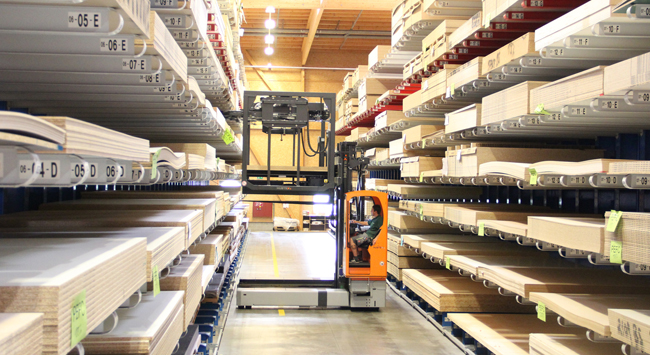
In the woodworking industry, lumber producers, dealers, and manufacturers constantly face the same hurdle: efficiently and safely handling heavy, bulky materials such as chipboard, decorative panels, and furniture boards. These valuable materials can easily incur costly damages like scratches or breaks during handling, which translates to significant financial losses. Given the variety of solutions available, from manual picking systems to fully automated logistics operations, decision-makers must understand the range of options on the market and the key factors that influence the optimal choice for their operations.
At first glance, handling and delivering sheet materials without damage might seem simple. However, the logistics of managing these materials are complex. Teams must navigate the delicate process of removing large sheets from racks and transporting them to loading areas. Many companies still rely on conventional forklifts and manual picking, but this traditional approach often comes with its own set of challenges. Workers can become overstrained, and delicate timber surfaces are vulnerable to scratches, dents, or breaks. As a result, companies are increasingly turning to assistance systems and purpose-built vehicles from companies like HUBTEX to minimize these risks and improve handling efficiency.
As Alexander Baumann, President at Hubtex North America, explains, “There’s no one-size-fits-all solution. Every company needs a system tailored to its own conditions.” The needs of producers, dealers, and manufacturers vary significantly based on their position in the value chain.
These differing operational structures mean that companies must choose order-picking solutions that are tailored to their unique environments and workflows.
When evaluating material handling solutions, decision-makers must consider several critical factors, such as:
A key factor in decision-making is integrating the chosen handling system with existing warehouse management systems (WMS) and production interfaces, as this will ensure seamless operations and overall efficiency.
For smaller to medium-sized operators, manual systems using conventional forklifts may be sufficient. However, companies handling larger volumes may require more advanced solutions, such as multidirectional sideloaders that operate efficiently in narrow aisles. These sideloaders can be adapted with modular equipment to suit specific needs. For example, vacuum lifting systems integrated into platforms allow a single operator to safely handle heavy boards, reducing the risk of damage.
As operations grow, advanced platforms capable of picking from both sides of the aisle or stacking materials with telescopic systems can offer near-automated performance. These systems bring significant improvements in throughput and operational efficiency, allowing businesses to handle larger volumes while minimizing the risk of damage to materials.
Ultimately, there is no universal solution for every warehouse or operator. Whether a company requires a manual system, a semi-automatic solution, or a fully automated material handling system, each choice must be tailored to the company’s specific requirements. The right decision depends on factors such as material volume, available space, and the overall logistics process.
By aligning order-picking technology with the broader logistics processes, companies can achieve a balance of safety, efficiency, and long-term value that suits their unique operational needs.
As the woodworking industry continues to evolve, the importance of efficient and safe material handling solutions cannot be overstated. Customised, flexible solutions that align with a company’s specific operational needs help prevent damage to valuable materials, improve productivity, and reduce overall costs. By investing in the right material handling systems, companies can enhance safety, streamline operations, and ensure the long-term success of their businesses.
Connect with us on LinkedIn for more updates.
Tags: Hubtex, lumber logistics, material handling systems, sheet material handling, woodworking automation, woodworking warehouse solutions







Comments: