

Thursday, December 4, 2025
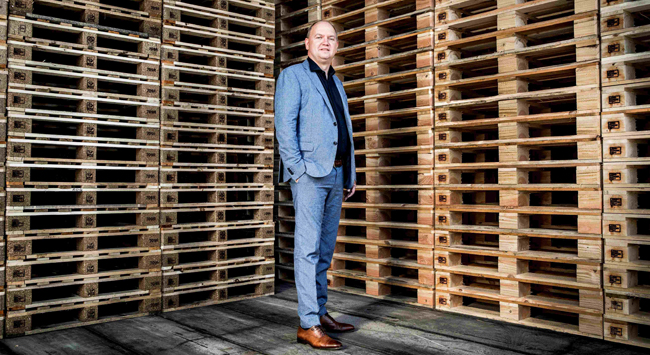
The Franco-Belgian worldwide pallet giant, PGS Group, has officially begun its first operations in the UK, representing an important milestone indicating increased confidence in the UK logistics and wood pallet industry following Brexit. The new facility, which is situated in the port town of Grays, Essex, represents a crucial alliance within the Fast-Moving Consumer Goods (FMCG) supply chain and represents the next strategic phase in the company’s broad European expansion.
The 16,000 square meter, 24/7 facility is dedicated exclusively to processing second-hand pallets for the industry-leading pallet rental specialist, La Palette Rouge (LPR). This venture is the result of PGS Group winning a competitive tender from LPR, with both firms committing to joint investment in the site’s development and optimisation.
The Grays site is one of the largest within the PGS Group’s network, immediately employing 70 people and boasting an initial processing capacity of 2.8 million pallets each year. Furthermore, the company has ambitious plans to expand capacity to five million pallets annually, underscoring the strategic importance of this new UK hub.
The location in Essex is crucial. It provides direct links to France and acts as a gateway to new UK markets, offering both logistical efficiencies and new opportunities for timber supply and international partnerships. This geographical advantage helps to integrate the UK operations seamlessly into PGS Group’s existing European network, which spans 13 countries, including France, Germany, Spain, and the Netherlands.
According to Luc Grauwet, CEO of PGS Group, the launch is a natural progression of their long-standing relationship with LPR. “This new site is a logical next step in our collaboration with LPR. It will give us access to an important market and also to new logistics and operational opportunities that strengthen our European position,” he commented.
The core function of the Grays facility is to enhance the circular economy model of pallet recycling and reuse for the FMCG and retail sectors served by LPR. The PGS team will focus on efficiently collecting, identifying, and sorting returned pallets.
Crucially, any wooden packaging requiring repair will be treated to the ISPM15 standard. This International Standard for Phytosanitary Measures No. 15 mandates that all wooden packaging materials used in trade between Great Britain and the European Union must be heat-treated to eliminate pests and diseases. Since the UK left the EU, ISPM15 compliance has become a mandatory requirement for all wooden packaging exported from the UK to Europe.
By dedicating a major, high-capacity facility to ISPM15 treatment, PGS Group is providing a vital service that helps the entire UK export logistics chain navigate the complexities introduced by the new trading relationship with the EU. This strategic investment mitigates the risk of costly border delays, non-compliance penalties, and the potential destruction of non-compliant shipments, securing the flow of goods for LPR’s major clients in the FMCG supply chain.
PGS Group’s ability to execute this high-volume, standards-compliant operation is largely due to its commitment to vertical integration. The company is unique in the wood packaging sector for owning its own sawmills and pallet production facilities.
Across its 50+ sites, PGS Group employs over 1,000 people and has a massive annual throughput: it produces 25 million new pallets and recovers 20 million recycled pallets a year. This comprehensive, integrated model—from timber sourcing to manufacturing, reconditioning, and logistics—gives the company crucial control over quality, material supply, and, most importantly, sustainability. This end-to-end control is vital for a partner like LPR, which specialises in pallet pooling and requires consistent quality and robust circulation management across its vast European network.
The joint investment in the Grays facility—which LPR originally established two years prior—allows PGS to apply its expertise and technology to an already operational site, rapidly scaling up its capacity and efficiency. This collaborative approach between a leading pallet pooling specialist (LPR) and a vertically integrated supplier/reconditioner (PGS) represents a powerful model for maximising asset lifespan and reducing environmental impact in a sector where demand for robust, standardised, and sustainable logistics platforms is constantly growing.
Read more news on: wood packaging
Get such updates through woodandpanel.us
Tags: circular economy, FMCG supply chain, La Palette Rouge (LPR), pallet recycling, PGS Group, UK logistics, Wood pallets












Comments: