

Monday, June 2, 2025
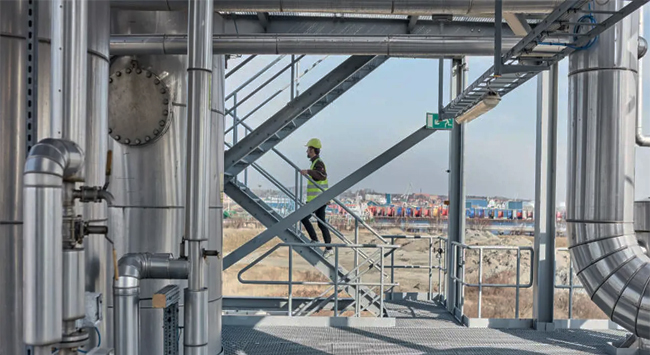
According to Valmet, Meliora Bio AsP of Denmark has reopened the Kalundborg factory of the former Inbicon, which had been dormant since 2014. The fully renovated plant is currently producing lignin products, cutting-edge food additives, and advanced second-generation bioethanol.
Following Meliora Bio ApS’s acquisition of the bioengineering firm COMET, the two companies upcycle agricultural leftovers from wheat straw collected from nearby farmers to create lignin, prebiotic dietary fibres, and second-generation bioethanol. The recently renovated biorefinery wants to use as little energy and water as feasible, produce zero waste, and have the lowest possible CO2 footprint. By using their entire harvest, local farmers gain from this circular method, which also improves the food chain’s circularity and creates a significant new cash stream.
One of the key technologies in the biorefinery that converts wheat straw wastes into second-generation bioethanol is Valmet’s BioTrac pretreatment process. ARRABINA, a prebiotic fiber that is added to many foods to support improved gastrointestinal health, is also made as a byproduct of the process by producing C5 sugar.

The beginning of a creative adventure
“Our goal is to produce several thousand tonnes of ARRABINA and 4.5 million liters of ethanol at full capacity. We are also exploring the potential to use lignin as a substitute for bitumen in asphalt. Lignin’s future applications are a significant topic in the biomass sector,” says Henrik Maimann, CEO at Meliora Bio. Stable output as well as increased cooking and steam explosion efficiency have resulted from the Valmet BioTrac design.
The Danish government requested that Meliora make sanitary ethanol for use in hospitals when the pandemic began in 2020. “Over that summer, we produced 2.5 million liters of ethanol for hospitals and institutions that needed sanitisers. During this time, we encountered COMET, which had patented and developed prebiotic food ingredients derived from straw and hemicellulose. After several months’ consideration, we decided to join this innovative project, marking the beginning of our current journey,” says Maimann.

Cooperation and support that work
Since 2020, Valmet has been working with Meliora, and the collaboration has been mutually beneficial. “We’ve enjoyed extensive cooperation, particularly in recent months, focusing on service and maintenance. Valmet’s experienced team has been invaluable, providing excellent support and maintaining open communication about necessary adjustments,” says Maimann.
“The operational dialogue is excellent, and we appreciate being able to bring customers to showcase the Valmet BioTrac technology at the Meliora site. It’s fantastic, and we’re very happy that our great collaboration with Meliora enables us to do this,” notes Tomas Jonsson, Sales Manager Biomass Conversion, Valmet.
Confronting obstacles
Valmet BioTrac technology is a vital tool in overcoming challenges in production and streamlining operations. “We’re very satisfied with the Valmet BioTrac technology. It’s robust yet straightforward, and once our teams mastered it, it significantly eased their workload. The Valmet BioTrac design has been instrumental in overcoming previous challenges, leading to stable production and improved steam explosion and cooking efficiency,” exclaims Henrik Maimann.
Market rivals and potential future developments
ARRABINA by COMET is a crucial asset for Meliora.“Our interdependence made merging a natural step. Prebiotic fibre is our most profitable product, and we will grow even stronger as one company. We now have 65 employees working on the site,” affirms Maimann. Meliora, the first straw-based bioethanol plant, started in 2008 by Orlen, now has a significant European competitor. “We don’t view them as a threat due to their vast market size. It’s beneficial to have someone demonstrating the feasibility of such projects. As for the future, our strategy is to progress incrementally, validating prebiotic fiber sales before scaling up production. We’re confident in the plant’s capabilities, as results have been promising,” says Maimann. “We recognise that several investments are necessary for our future production, but timing is critical. Establishing a new plant takes at least two years from the decision point. So we have to align our timing with market demands. We aim to have a fully operational plant by next year. While this doesn’t guarantee immediate operation, the plant will be ready, allowing us to decide on scaling up production based on prebiotic sales,” Maimann concludes.
For more interesting topics, click here: WOODWORD
To learn industrial insights, go through: Valmet, zero waste, biomass
Tags: #1 woodworking magazine, best wood magazine, bio-based materials, Bioenergy Production, biomass, biomass conversion, board and paper machines, byproducts, carbon footprint, carbon neutrality, circular economy, Eco-friendly Technologies, Energy efficiency, energy production, fiber processing, Industrial Automation, Paper & Board Production, process automation systems, process technologies, pulp and paper industry, pulp mills, renewable energy, sustainable solutions, Valmet, Valmet latest update, waste-to-energy, wood, wood and panel, wood panel composite, woodworking, woodworking and manufacturing, woodworking and processing, woodworking industry, zero-waste production








Comments: