

Friday, October 10, 2025
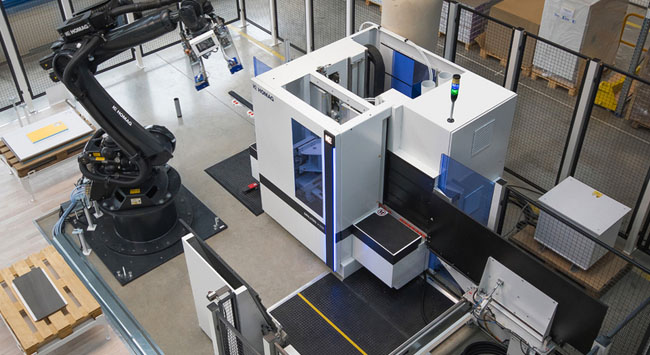
In recent years, automation in woodworking production has emerged as a key solution to improve operational efficiency, reduce material waste, and lower labor costs. Keshav Murthy, Director of Sales, Marketing, and LCS at HOMAG India, offers valuable insight into how automation technologies are shaping the woodworking sector across India. From small workshops to large-scale manufacturers, automation is helping companies scale their production processes, improve product quality, and create safer working environments.
Murthy explains that automation is not simply about replacing manual labor but about enabling manufacturers to meet growing demands with consistent output and improved safety standards. “Automation allows manufacturers to meet the increasing demand while ensuring higher precision, reduced errors, and better safety on the shop floor,” he says. The growing adoption of automated solutions is transforming the Indian woodworking industry, making it more competitive, efficient, and sustainable.
In India, the woodworking sector has predominantly relied on conventional standalone machines, particularly among small and medium enterprises. Estimates suggest that only about 20 to 30 percent of production is automated, with the remaining 70 to 80 percent still dependent on traditional methods. However, as the industry continues to grow, there is a rapid shift toward automation. Many larger manufacturers are now investing in integrated automation solutions to enhance productivity and product quality. This trend is expected to accelerate with the rise of Industry 4.0 technologies, which bring greater digital connectivity and smarter systems to the factory floor.
Automation in woodworking includes several key technologies such as CNC machines for precise drilling and routing, robotics for tasks like sanding, painting, and material handling, and conveyor systems to improve workflow efficiency. Automated storage and retrieval systems, as well as integrated solutions, help streamline material transport and optimize space. These technologies allow woodworking companies to increase productivity, reduce operational costs, and enhance product quality across all stages of production—from raw material processing to finishing.
Automation in woodworking offers numerous advantages. Precision and consistency improve significantly with automated systems, which reduces defects and rework. Moreover, labor costs decrease as repetitive tasks are automated, and safety is enhanced with sensors, automatic shutoffs, and better control systems. By automating production processes, companies can lower material waste through optimized cutting and handling techniques.
HOMAG India plays a vital role in supporting automation adoption across the country. Murthy highlights the growing importance of automation solutions such as CNC machines, robotic arms, and automated storage systems. “Our customers are increasingly seeking solutions that not only improve output but also reduce energy consumption and environmental impact,” he explains. The integration of AI and IoT technologies helps companies monitor production in real-time, optimize processes, and ensure predictive maintenance.
While large manufacturers are quick to adopt automation, small and medium enterprises (SMEs) are also beginning to embrace these technologies. Modern automation solutions, such as compact CNC routers and robotic saws, are scalable and flexible enough to suit different production volumes and product complexities. “Even small workshops now have access to technologies that were once only affordable for large manufacturers,” Murthy notes. “This levels the playing field and helps businesses stay competitive.”
Automation can be applied across a wide range of woodworking processes, from cutting and edge banding to routing, drilling, sanding, and finishing. For mass production, automated systems help maintain uniformity and low unit costs. For smaller batch production, automation enhances flexibility, allowing manufacturers to offer personalized and complex designs without the need for significant setup time or costs.
HOMAG India offers tailored solutions across all segments of the woodworking industry. For smaller businesses, compact machines like the SAWTEQ S-160 beam saw and EDGETEQ S-230 edge bander provide flexible automation with minimal space requirements. Mid-range customers, including commercial builders and interior designers, benefit from machines like the SAWTEQ S-180/200/300 and DRILLTEQ drilling machines. Large-scale manufacturers can take advantage of fully integrated production lines featuring high-speed saws, robotic systems, and CNC machines. These systems enable seamless workflows with minimal manual intervention.
Digitalization plays an essential role in modern woodworking automation. By integrating machines, tools, and materials into a unified IoT ecosystem, companies can benefit from real-time monitoring, predictive maintenance, and process optimization. HOMAG’s Tapio platform, for example, connects machines and workflows, providing a digital solution that enhances flexibility and efficiency. This connectivity allows businesses to make data-driven decisions, improve machine utilization, and reduce unexpected downtime.
“The integration of digital technologies has transformed the woodworking industry,” says Murthy. “Digital tools support automated job scheduling, cutting optimization, and material tracking, which streamlines operations and reduces planning errors.” The digitalization of workflows allows for faster production times, greater quality control, and a more agile response to customer demands.
The future of India’s woodworking industry lies in embracing automation and digitalization. With the continued development of automated solutions and digital platforms, woodworking businesses of all sizes can enhance efficiency, improve product quality, and reduce environmental impact. As automation becomes more accessible and affordable, manufacturers will be better positioned to meet the growing demand for high-quality furniture and interior products.
Keshav Murthy concludes, “Automation is not just a trend; it’s a necessity for sustainable growth in the woodworking industry. It empowers manufacturers to stay competitive while improving their operational processes. The future belongs to those who embrace automation and integrate it into their production systems.”
Stay connected, follow us on LinkedIn.
Tags: CNC machines, digitalization in woodworking, Homag India, ROBOTIC SOLUTIONS, woodworking automation













Comments: