Home»Woodword» Building to last: The indispensable role of moisture control in modern woodworking
Building to last: The indispensable role of moisture control in modern woodworking
Friday, October 3, 2025
The UK construction industry is increasingly embracing timber-frame and mass timber systems for their outstanding performance, speed of build, and critical sustainability benefits. As a renewable, low-carbon material, timber is a powerful solution in the journey toward Net Zero 2050 goals. It’s estimated that over 35,000 timber-frame homes are built annually across the UK, with systems like Cross-Laminated Timber (CLT) and Glulam gaining traction in larger commercial and multi-storey projects.
However, the enduring success of any timber-based structure hinges on one foundational principle: effective moisture management. Like masonry or steel, wood is a durable material proven to last for centuries—provided it is kept dry. Any building material, when exposed to unmanaged moisture, can face significant issues, but for hygroscopic materials like wood, prolonged wetting can lead to specific problems such as dimensional change (swelling or shrinking), staining, mould growth, and, most critically, fungal decay that compromises structural integrity.
The good news is that the risks associated with moisture are entirely preventable with proactive planning and diligence. Moisture control is not a niche technical issue; it is an integrated, shared responsibility that must be factored into every stage of a project, from initial design to long-term maintenance.
The Structural Timber Association (STA) framework
To ensure consistent quality and long-term durability, leading industry bodies like the Structural Timber Association (STA) have developed clear, practical frameworks for moisture management. This approach moves beyond simple problem-solving and establishes a systematic, preventative mindset for project teams working on timber construction across the United Kingdom.
Aligning with recognised industry standards such as the RIBA Plan of Work, a comprehensive moisture management strategy breaks down the process into clear, accountable steps. Implementing this framework drastically reduces the risk of costly surprises, delays, and remedial work, which can often run into thousands of pounds per square metre if structural timber is compromised.
The seven pillars of moisture control
A robust strategy should follow a clear process, ensuring oversight and accountability at every phase:
Set clear responsibilities: Accountability is the starting point. Early in the project, definitively assign who is responsible for overseeing and reporting on moisture control for all phases: design, procurement, on-site construction, and handover.
Outline the strategy: Integrate moisture control into the overarching project plan. This means defining the moisture content targets for the timber components, identifying potential risk areas, and outlining a general strategy for protection.
Identify specific risks: Conduct a formal risk assessment. Pinpoint what could go wrong, such as exposure during transportation, heavy rain during erection, or poor site drainage, and detail preventative measures for each scenario.
Lock in technical details: Finalise the technical design to ensure long-term durability. This includes specifying proper detailing around vulnerable areas like windows, doors, and roof junctions to ensure water is effectively drained away and that the building is designed to allow any trapped moisture to escape.
Implement site-level controls: This is the crucial practical phase. Before any timber is enclosed by membranes or cladding, its moisture content (MC) must be checked with a calibrated moisture meter and recorded. Best practices include separating timber from the ground, ensuring elevated storage with ventilation, and using temporary protection (such as building wraps or heavy-duty tarps) to prevent water ingress during the build.
Handover and maintenance protocol: A durable building requires a clear instruction manual. Building owners and facilities teams must be provided with a concise maintenance plan detailing how the external envelope (gutters, roof, cladding) should be regularly inspected and maintained to prevent future water ingress.
Long-term monitoring: The performance of the building needs to be tracked. While not always a mandatory requirement, establishing a system for occasional checks of concealed timber elements can assure that the structure continues to perform as designed well beyond the initial handover.
Addressing the common moisture risks
While a universal strategy is essential, project teams must be keenly aware of the specific ways moisture can threaten a building:
1. Ingress and Condensation
Ingress (External Water Penetration): This typically occurs after the build is complete and is often a result of poor detailing. Faulty roof flashing, inadequately sealed window reveals, or blocked gutters can all channel water directly into the structure. The Solution: Rigorous quality control checks of the building envelope, meticulous detailing during the design phase, and scheduled post-occupancy maintenance.
Condensation: This is often invisible and more insidious. Surface condensation on cold surfaces can lead to unsightly mould and indoor air quality issues. Interstitial condensation occurs hidden within the building fabric when warm, moist air meets a cold surface inside the wall or roof assembly. The Solution: A design that incorporates effective vapour control layers and air barriers to prevent moisture-laden air from reaching cold surfaces, coupled with a well-designed ventilation strategy.
2. Trapped Moisture
This is a risk most pertinent to the construction phase and is a major cause of defects. It can arise from:
Wetting During Construction: Inadequate protection of structural timber elements (like wall panels or CLT slabs) from rain or groundwater before the building is fully weathertight.
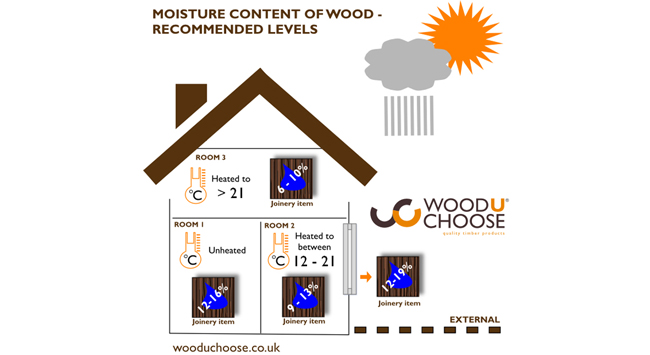
Enclosure Before Drying: Sealing up timber that has a moisture content above the acceptable threshold. Timber is hygroscopic—it reaches an equilibrium with its environment. If it is wet when enclosed, that trapped moisture cannot escape, potentially leading to decay.
The Solution: The use of moisture meters on-site is non-negotiable. Builders must follow a “measure, manage, and record” policy, ensuring that the MC is within the specified dry range (often below 20%, well below the threshold for decay) before adding subsequent layers. Furthermore, ensuring a swift weathertight envelope and proper temporary drainage protocols are critical.
Conclusion
Timber’s longevity is not a matter of luck; it is a direct function of good design and careful execution. When properly planned, constructed, and maintained, timber structures are demonstrably durable, offering a lifespan that easily exceeds the typical 60-year design life of a residential building. By prioritising a systematic, shared approach to moisture management, the UK woodworking industry can confidently deliver the low-carbon, high-performance buildings needed to address the nation’s housing and climate challenges.
Embracing a comprehensive strategy like the STA’s is not about adding complexity; it’s about embedding best practices early in the process to protect the investment, performance, and long-term value of a highly sustainable building system.

















Comments: